
Do I Need to Re-Torque Lug Nuts? Yes, and Here's Why
The shop asking you to come back is not an upsell. Here is the physical reason a fresh wheel joint loses clamping force in its first miles.

The shop asking you to come back is not an upsell. Here is the physical reason a fresh wheel joint loses clamping force in its first miles.
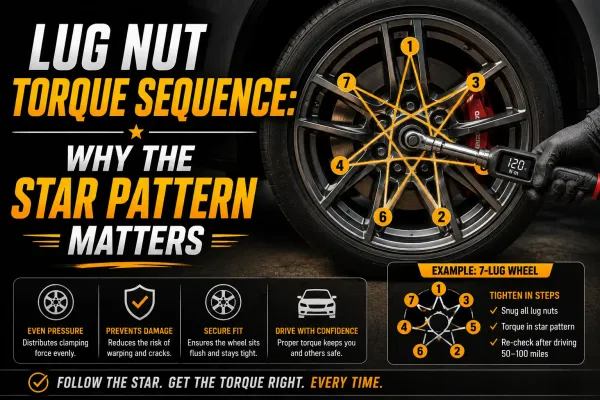
Tightening one fastener changes the load on its neighbors. That is why order matters, and why one lap around the wheel is not the finished job.

Your car says one thing and the wheel maker says another. Here is the reasoning that settles it, and what to do when the wheel maker publishes nothing.
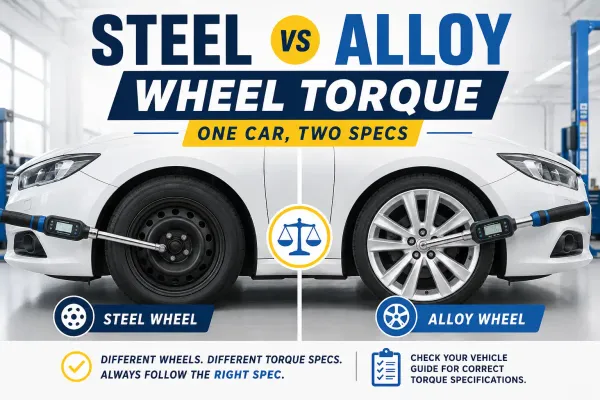
A vehicle supplied with both wheel types can carry two torque figures. Why the material changes the joint, and where the second spec hides.

The index has no entry for lug nuts because it is filed under changing a tire. Here are the four places it hides and what to do when it is in none of them.
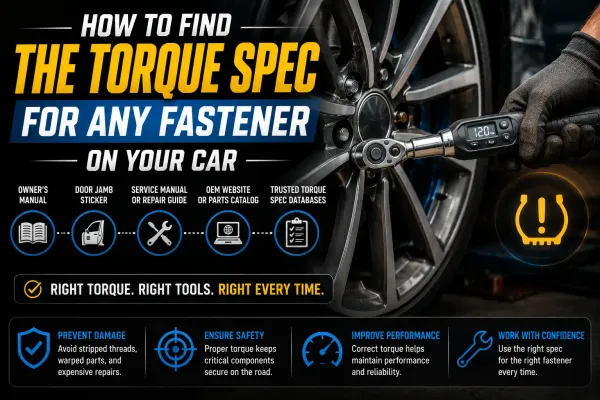
A torque figure without its conditions is not a specification. Here is what the conditions are, which document holds yours, and how to get into it.

After a wheel change a TPMS light usually means the system has not been told what changed. Here are the three fitment situations, kept apart.
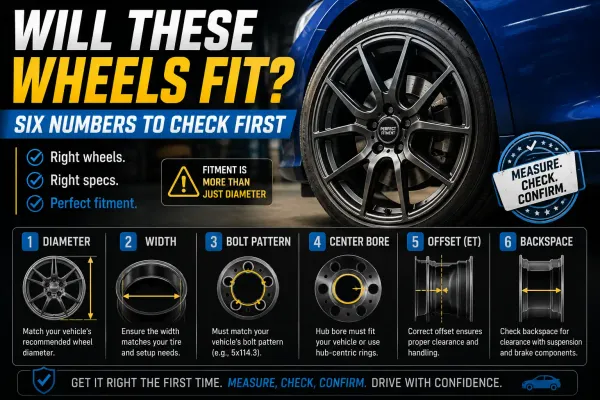
A used wheel has to be right on six specifications, and bolting on proves none of them. Here is what to ask a seller, in the order that fails fastest.

A calculator does geometry from nominal dimensions. It has no model of your vehicle and no knowledge of how a real tire differs from its stated size.
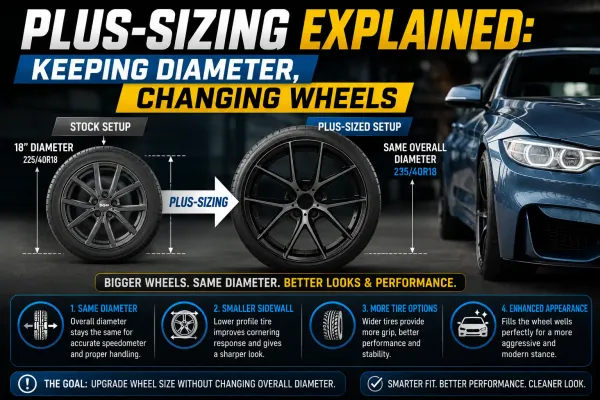
Holding overall diameter keeps the speedometer honest, but that is only the first constraint. Load rating and clearance do not carry over automatically.
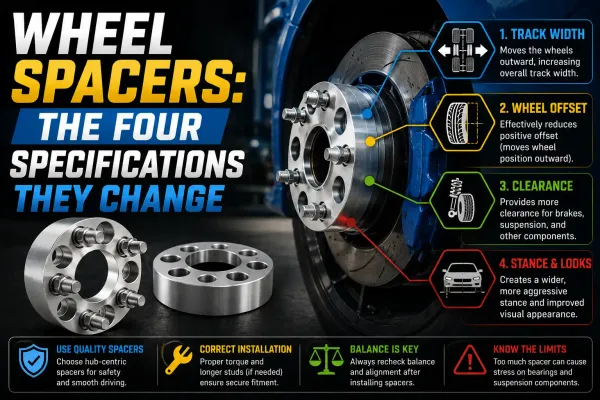
A spacer changes effective offset, thread engagement, what centers the wheel and the load path through the hub. Each one, without a product in sight.
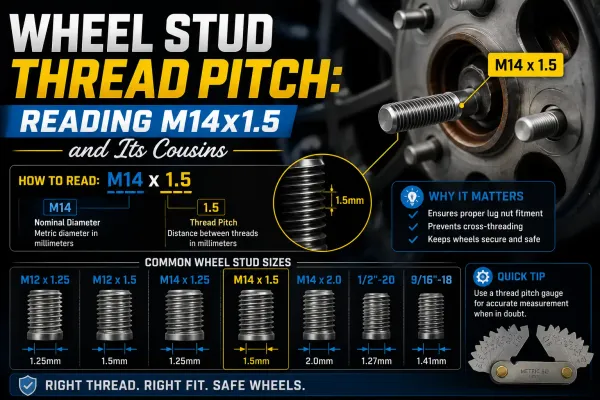
Threads that are close are more dangerous than threads that do not fit. Here is how a designation is structured and how to identify yours with a gauge.
Tire-Wheel
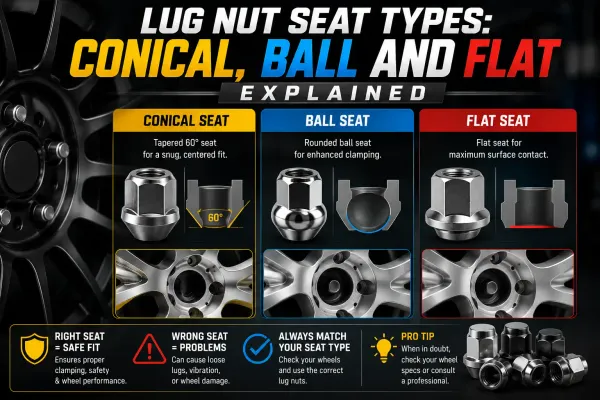
Threading on and seating correctly are two different things. Here is what the seat does in the joint and why a mismatch fails even at the correct torque.
Tire-Wheel
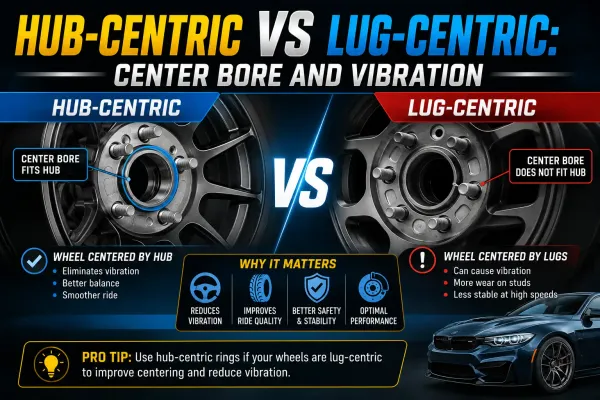
Something has to center the wheel, and the two systems use different things. Here is what changes for the studs when the wrong one is doing the job.
Tire-Wheel
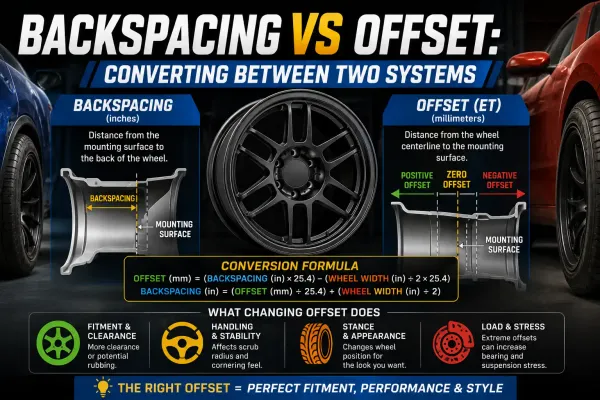
They measure the same geometry from different reference points. Converting needs a third number, overall width, and stated width is not overall width.

Tire-Wheel
Offset is where the mounting face sits relative to the wheel's centerline. What moving it does to track, clearance and the load path through the hub.
Tire-Wheel
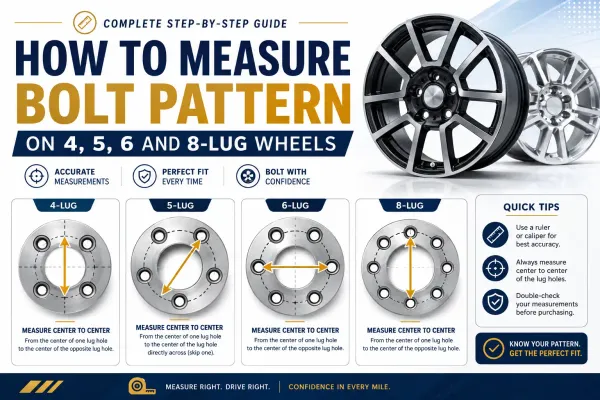
Even lug counts measure straight across. Odd counts do not, which is why five-lug confuses people. Here is the method, plus the two-convention trap.
Tire-Wheel
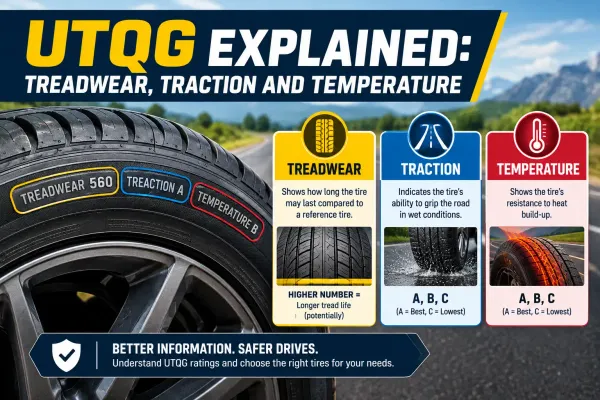
Treadwear grades are assigned relative to each manufacturer's own reference, which makes cross-brand comparison far weaker than the numbers suggest.
Tire-Wheel
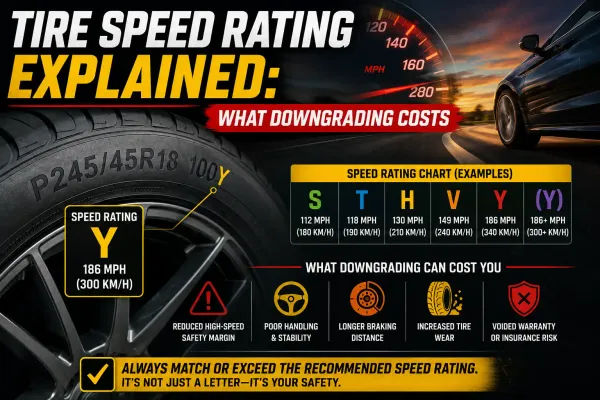
The speed rating certifies more than top speed. It is a proxy for construction and heat tolerance, which is why 'I drive slowly' is not the whole argument.
Tire-Wheel
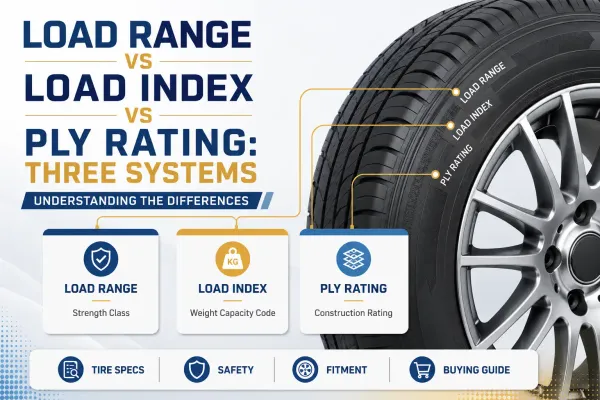
One tire can carry an E, a 121 and a 10-ply marking. They are three systems from three eras, and you cannot convert between them by reasoning.
Tire-Wheel
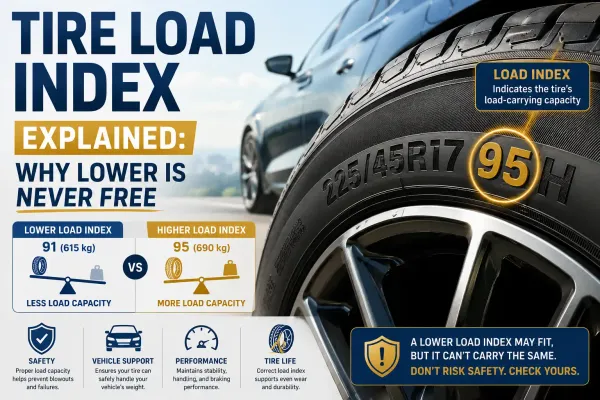
The load index is an index into a standard table, not a weight, and the scale is not linear. Here is what it rates and why going lower is never neutral.
Tire-Wheel
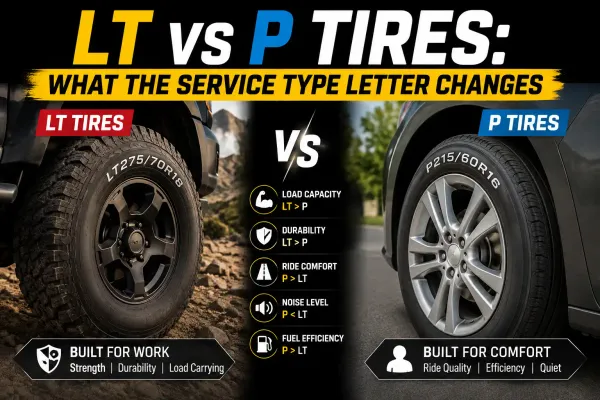
P, LT, ST and XL are not quality grades. They describe service type and rating conventions, and swapping between them changes how the tire is rated.
Tire-Wheel
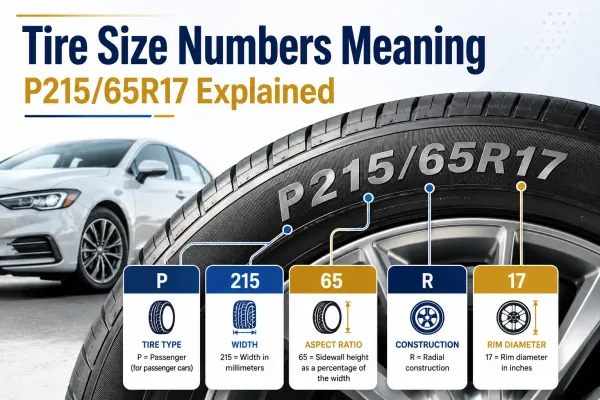
Three numbers in three different unit systems. Here is which is millimeters, which is a percentage, which is inches, and why that trips people up.
Tire-Wheel
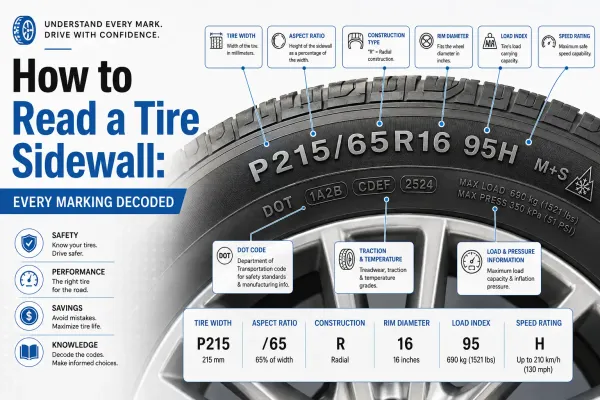
A sidewall carries about six independent specifications plus manufacturing data. Here is what each marking governs, in the order you meet it.