Will These Wheels Fit? Six Numbers to Check First
A used wheel has to be right on six specifications, and bolting on proves none of them. Here is what to ask a seller, in the order that fails fastest.

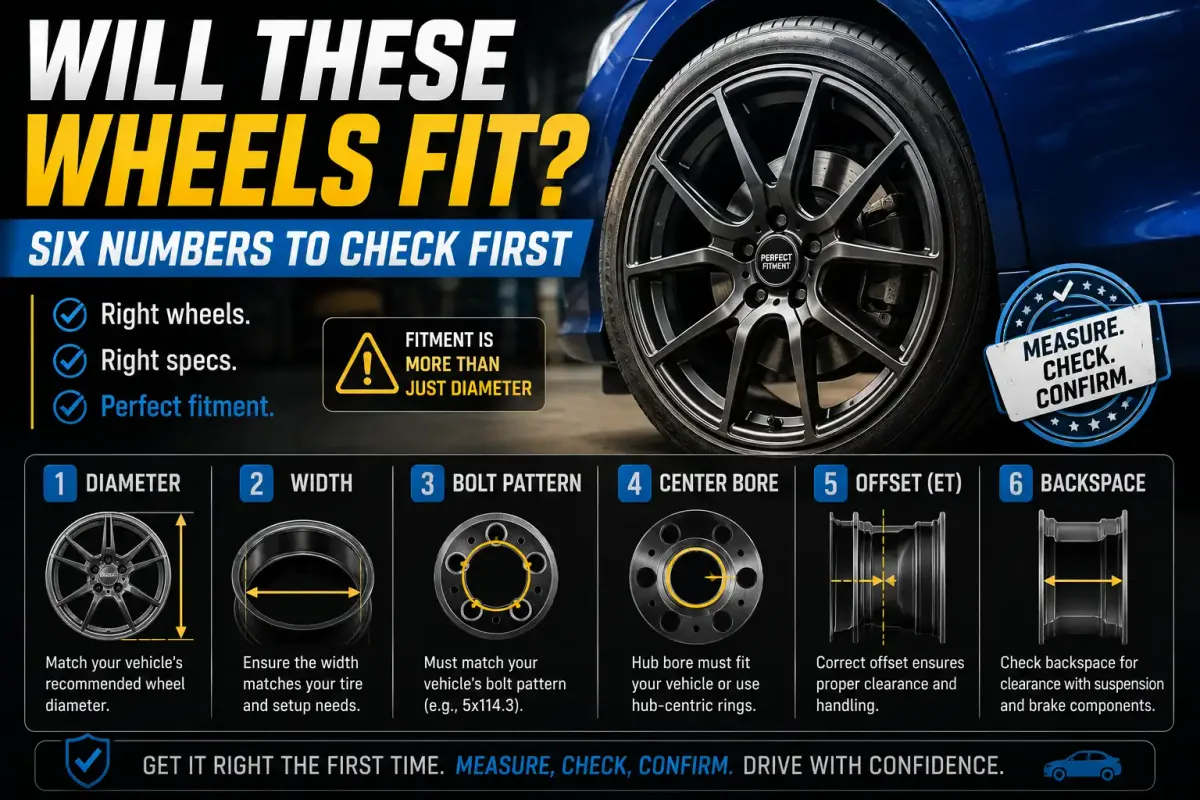
Short answer: six specifications have to be right, and the wheel bolting on proves none of them. Bolt pattern, center bore, offset, width, lug seat type and fastener thread. Each is independent, each has its own failure mode, and a seller on a marketplace usually knows one or two of them at most.
This is the practical page of the wheel cluster. Below is what to ask, in the order that fails fastest, so you spend the least time on wheels that were never going to work.
The six, at a glance
| # | Specification | What goes wrong |
|---|---|---|
| 1 | Bolt pattern | Wheel will not mount, or nearly-fits and loads studs off-axis |
| 2 | Center bore and centering | Wheel not concentric; studs carry position as well as clamp |
| 3 | Offset | Clearance and bearing loading both change |
| 4 | Width | Tire mounted outside its approved rim range |
| 5 | Lug seat type | Joint not properly clamped at any torque |
| 6 | Fastener thread | Threads destroyed on installation |
One: bolt pattern
The hole count and the pitch circle diameter both have to match, and patterns exist that differ by small amounts.
Ask the seller for the pattern as marked on the wheel, and for a photograph of any casting marks on the back. If they do not know it, you can measure it, with the caveat that odd lug counts are measured by an approximation: how to measure bolt pattern.
This goes first because it is the cheapest to check and the most likely to end the conversation.
Two: center bore and what centers the wheel
The center bore has to relate correctly to your vehicle's hub.
A bore smaller than your hub will not go on at all. A bore larger than your hub will go on and will not be centered by the hub, which means something else has to do that job, or nothing does.
Ask for the bore diameter and for a photograph looking at the back of the wheel. Aftermarket wheels commonly have oversized bores intended to be used with centering rings, which is a normal arrangement and not a fault, provided the rings are correct: hub-centric vs lug-centric.
Three: offset
Offset decides where the wheel sits relative to the vehicle, and it affects both clearance and how hard the wheel bearing works.
Ask for the ET marking on the wheel, with a photograph. If the seller offers backspacing instead, that is a different measuring convention and converting needs the wheel's overall width as well: backspacing vs offset.
Do not accept a converted figure as final. The bearing loading consequence is the part that gives no warning: wheel offset explained.
Four: width and the tire it will carry
Wheel width has to suit the tire you intend to run, because tires are approved for a range of rim widths.
Ask for the stated width, and be aware that stated width is measured between the bead seats and is not the wheel's overall physical width. That distinction matters for the offset conversion above and for clearance.
If the wheels come with tires, read the full sidewall codes on all four rather than assuming a set is matched: every number on your tire sidewall, decoded. And if the plan is a different size from your original, that is a system change: plus-sizing explained.
Five: lug seat type
The wheel decides which fastener it takes, and this is where a set can be entirely correct on the first four points and still be wrong.
Ask which fasteners the wheels were used with, and ask for a photograph looking straight into a lug hole. Conical, ball and flat seats are distinguishable in a good photograph, though conical seats with different angles are not.
This one fails silently, at the correct torque, over time: lug seat types, and why the wrong nut fails.
Six: fastener thread
If the wheels come with fasteners, the thread has to match your vehicle's studs, and a near-match is more dangerous than a mismatch.
Ask what thread the fasteners are, and plan to verify with a gauge rather than by threading one on: wheel stud thread pitch.
If the wheels come without fasteners, you need fasteners that match both your studs and the wheel's seats, which are two independent requirements.
What to ask a seller, in the order that fails fastest
Copy this and send it:
- What is the bolt pattern as marked on the wheel?
- What is the offset, the ET marking?
- What is the stated width and the center bore diameter?
- Photograph of the back of one wheel, showing any casting marks.
- Photograph looking straight into a lug hole.
- What fasteners were they used with, and are they included?
- If tires are fitted, the full sidewall code from each of the four.
Questions one to three end most conversations in a minute. The photographs are worth more than the answers, because a seller who is guessing will guess, and a photograph will not.
Fitting them correctly is a separate job
Buying the right wheels and fitting them correctly are two different problems, and finishing the first does not start the second.
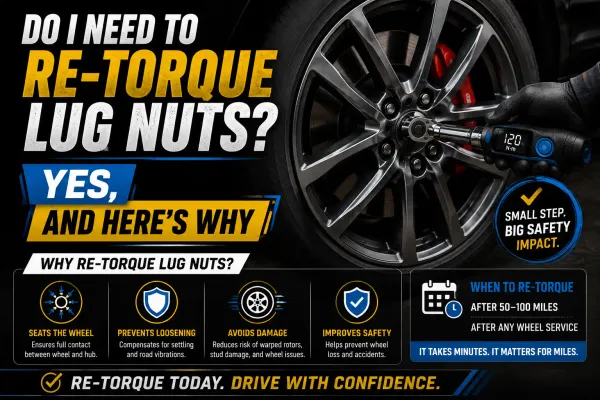
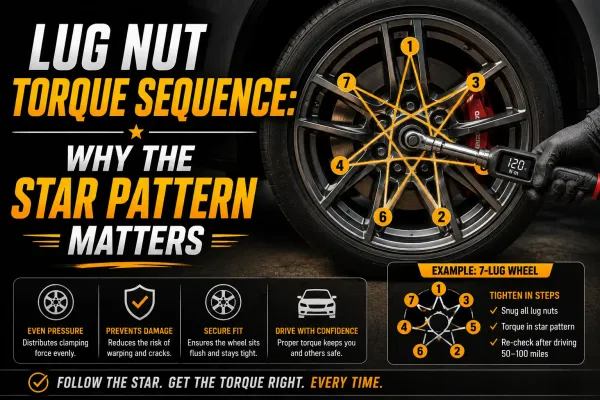
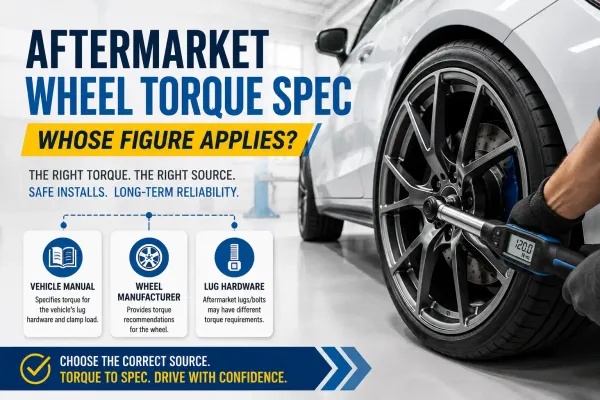
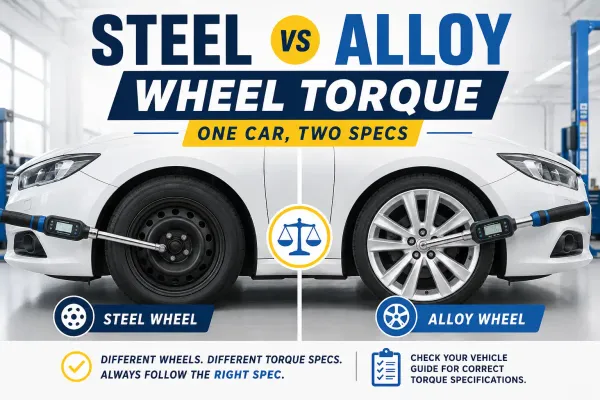
Wheel fasteners are tightened to a specification, in a sequence, and the specification is not a general figure you can take from a chart. Where yours actually lives: where your wheel torque spec actually lives.
If any of the six above is unresolved after the seller has answered, take the wheels to a tire and wheel professional before fitting them. This is an assembly whose failure mode is a wheel leaving a moving vehicle, and a professional confirming it costs very little against that. For the vehicle's own specifications: owner's manual vs service manual vs repair database.
Frequently asked questions
If a wheel bolts on, does it fit?
No. Bolting on tells you the holes cleared the studs and the threads engaged. It says nothing about pattern accuracy, centering, offset, seat type or thread match.
What is the most commonly missed check?
Lug seat type. A wheel can be correct on pattern, bore, offset and width and still take a different fastener seat, and the resulting joint fails quietly over time.
Can I use wheels from a different vehicle?
Only if all six specifications work for your vehicle. Sharing a bolt pattern is one of six checks, not a green light.
What should I ask a marketplace seller?
Bolt pattern, offset, width and bore, plus photographs of the back of a wheel and of a lug hole, plus which fasteners were used. The photographs are worth more than the answers.
Do I need new lug nuts with used wheels?
Possibly. The fasteners have to match both your studs and the wheel's seats, which are two independent requirements that the original set may not satisfy.