Lug Nut Seat Types: Conical, Ball and Flat Explained
Threading on and seating correctly are two different things. Here is what the seat does in the joint and why a mismatch fails even at the correct torque.

Short answer: no, threading on fine is not the same as correct, and the two are entirely independent. Thread fit is between the nut and the stud. Seat fit is between the nut and the wheel. A nut can have exactly the right thread and completely the wrong seat, and nothing about installing it will tell you so.
This is one of the highest-consequence, lowest-awareness items in wheel fitment. The assembly goes together, the torque wrench clicks, and the joint is not clamped the way it was designed to be.
What the seat does in the joint
A wheel is held on by clamping force, not by the fasteners passing through the holes.
When a nut is tightened, it stretches the stud slightly, and that stretch generates a force pulling the wheel against the hub. That clamping force is what holds the assembly together and what stops the wheel moving relative to the hub under load.
The seat is the contact geometry between the nut and the wheel, and it is what transmits that force into the wheel. If the seat geometry of the nut does not match the seat geometry machined into the wheel, the contact between them is not what the design assumed, and the force does not get transmitted properly.
The nut is still tight. The joint is not properly clamped. Those are different things.
Conical seats
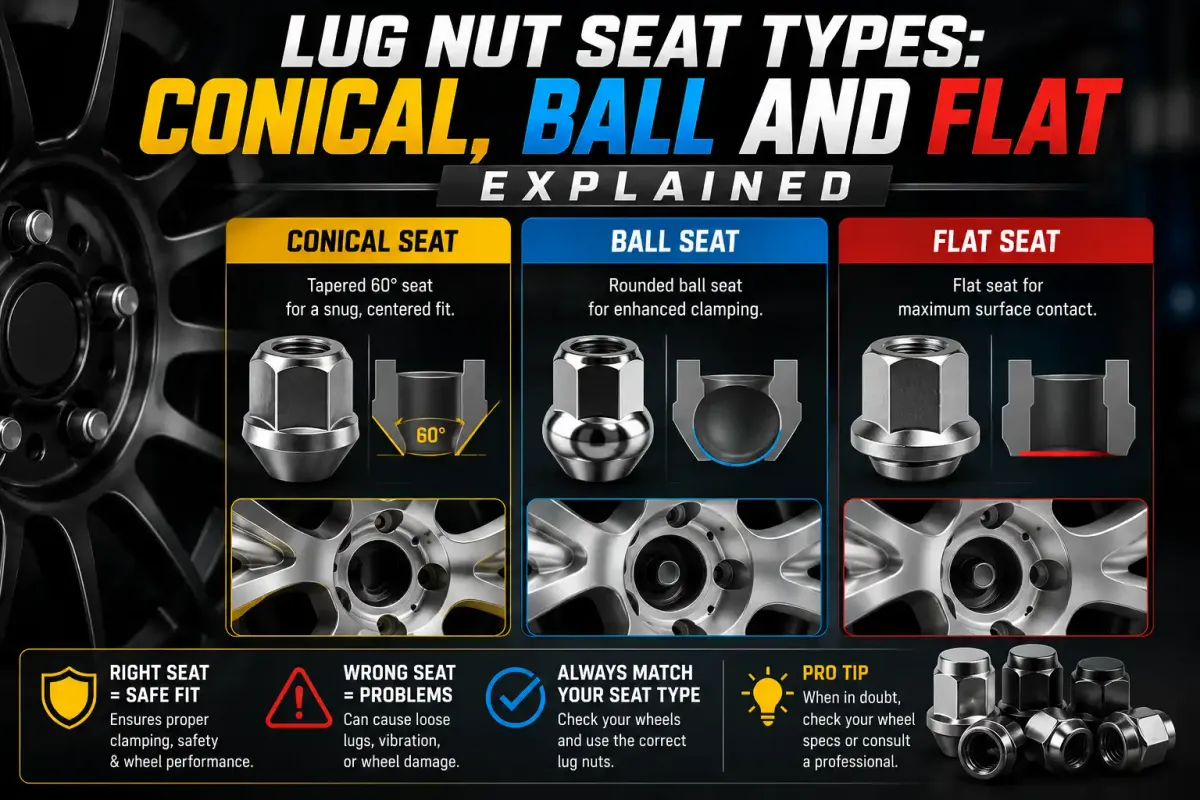
A conical seat, also called a tapered or acorn seat, has a cone-shaped bearing surface on the nut that mates with a matching taper in the wheel.
The taper does two jobs. It transmits clamping force, and it helps center the wheel as the nut draws down, which is the mechanism behind lug-centric designs: hub-centric vs lug-centric.
Cone angles are not universal. Two conical nuts can have different included angles, which means a conical nut is not automatically correct for a conical wheel seat. Same shape, different geometry, incorrect contact.
Ball or radius seats
A ball seat, also called a radius seat, has a rounded bearing surface rather than a cone.
The mating seat in the wheel is correspondingly rounded, and the contact between them is a curved bearing area rather than a conical band.
Ball and conical seats are the pair most commonly confused, because from a short distance a rounded seat and a tapered one look similar. Fitting a conical nut into a ball seat, or the reverse, produces line contact rather than the intended bearing area, concentrating the load onto a narrow band of material.
Flat seats with a washer
A flat seat is exactly what it sounds like: a flat bearing face, usually with a washer, bearing on a flat surface in the wheel.
Flat seat designs use the washer as part of the bearing arrangement, so the washer is not an optional extra. It is a component of the joint, and its condition and correct fitment matter.
Because a flat seat provides no centering action, wheels using flat seats generally depend on hub centering to position the wheel, which links this back to the previous section.
Why a mismatched seat fails even at the correct torque
This is the mechanism, and it is worth understanding rather than taking on trust.
Torque is a proxy. Tightening to a specified torque is a way of achieving a specified clamping force, and the relationship between the two depends on the friction and geometry of the joint. Change the seat geometry and you have changed the relationship, so the same torque produces a different clamping force.
Worse, mismatched seats concentrate the load. Instead of bearing across the designed area, the contact becomes a narrow band or a ring. That concentration can deform the seat in the wheel over time, and a deformed seat loses clamping force, which allows movement, which accelerates the damage.
The result is a joint that was tight when it was assembled and is progressively less tight afterward, with nothing visible from outside. That is why this fails quietly and why "I torqued them correctly" is not a defense against the wrong nut.
Torque itself is a subject with its own conditions: where your wheel torque spec actually lives.
How to identify which seat your wheels need
The wheel decides, not the nut and not the vehicle.
Look into a lug hole on the wheel. A cone-shaped opening indicates a conical seat, a rounded one a ball seat, a flat machined face a flat seat. Comparing the wheel's seat against the nut's bearing surface, side by side and in good light, is the practical check.
Two cautions. Conical seats with different included angles look identical to the eye, so identifying the shape does not finish the job. And on aftermarket wheels the correct fastener is specified by the wheel manufacturer, who is the authority on their own product.
If you are buying used wheels, ask the seller which fasteners they were used with, and ask for a photograph looking into a lug hole. That photograph will also show you the center bore and the bolt pattern: will these used wheels fit. The fastener thread is a further independent check: wheel stud thread pitch.
When to stop and have it checked
Stop and get a professional involved in any of these situations.
You cannot confidently identify the seat type. Guessing is not an option on a wheel fastener.
The wheels are aftermarket and came without specified fasteners. The wheel manufacturer specifies what they take, and if that information is unavailable the assembly is unverified.
Anything looks deformed, bright or polished around a lug seat, on the wheel or on a nut. That appearance can indicate a joint that has been moving.
The wheels have been off and back on and something feels different. Do not diagnose it from a description, including ours.
This is an assembly where the failure mode is a wheel coming off a moving vehicle. A tire and wheel professional checking it costs very little relative to that. For the vehicle's own specifications: owner's manual vs service manual vs repair database.
Frequently asked questions
Can I use any lug nut that threads on?
No. Thread fit and seat fit are independent. A nut can have the correct thread and the wrong seat, and nothing about installing it will reveal the mismatch.
What are the lug nut seat types?
Conical or tapered, ball or radius, and flat with a washer. Which one you need is determined by the wheel, not by the vehicle or the nut.
How do I tell what seat my wheels have?
Look into a lug hole. Cone-shaped means conical, rounded means ball, flat machined face means flat. Note that conical seats come in different angles that look identical.
What happens if the seat is wrong?
The contact area is not what the design assumed, so the same torque produces a different clamping force and the load concentrates. The joint loses clamping force over time with nothing visible from outside.
Do aftermarket wheels need special lug nuts?
Often, and the wheel manufacturer specifies which. If that information is not available, the assembly is unverified and should be checked by a professional.