How to Find the Torque Spec for Any Fastener on Your Car
A torque figure without its conditions is not a specification. Here is what the conditions are, which document holds yours, and how to get into it.

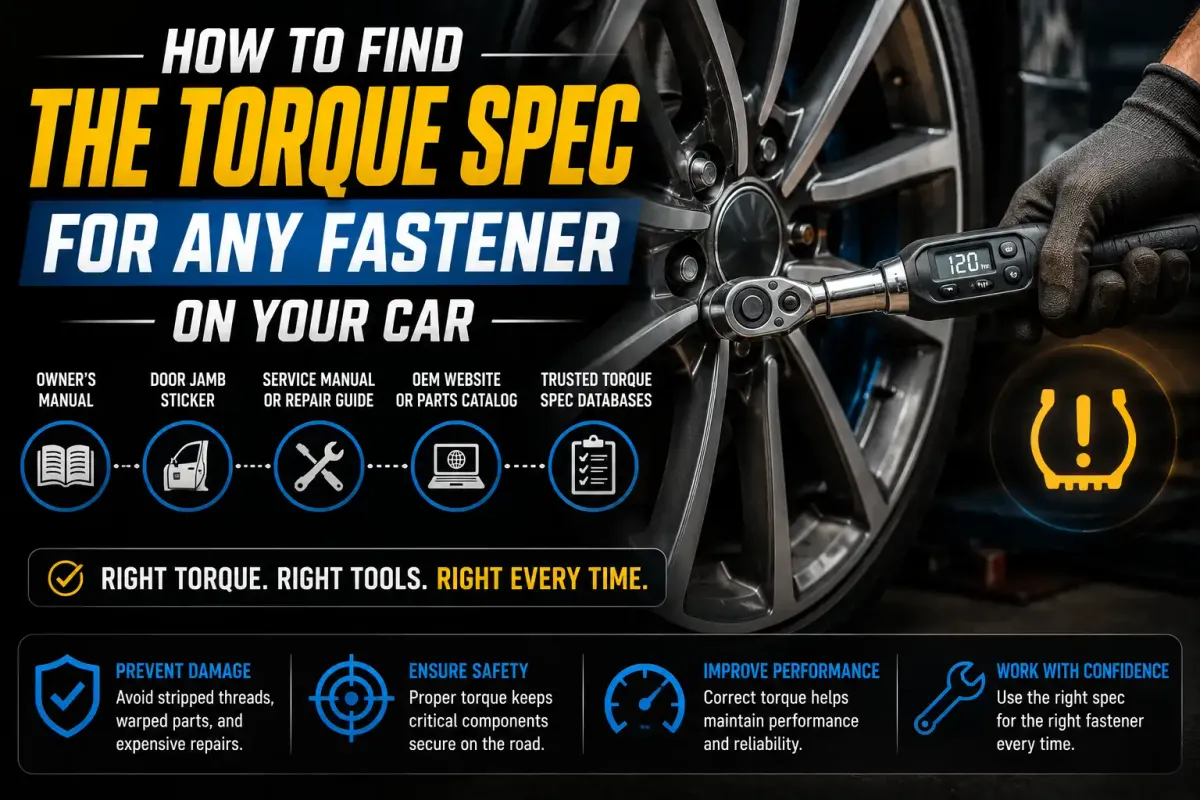
Short answer: the figure that applies to your vehicle comes from manufacturer service information for your model year and market, and there is no chart that can substitute for it. This site publishes no torque values, and this page explains why that is a considered position rather than an evasion. A torque figure is not a number. It is a number plus a set of conditions, and a chart that gives you the number without the conditions has given you something that reads like a specification and is not one.
If you are here because three websites gave you three answers, the rest of this page tells you what to do instead.
Why published torque charts disagree with each other
They disagree for the same structural reasons every published vehicle specification disagrees, and the causes are nameable.
Different configuration assumed. Different market. A running change during the production year that the chart cannot represent. A converted figure that has been rounded on its way between sites. Or, most often, one site copied another and inherited whatever was wrong.
Two charts agreeing is not confirmation if one came from the other, and there is no way to tell from the outside. The general problem: why two websites give your car two different numbers.
A torque figure is a number plus conditions
This is the idea the rest of the page hangs on.
When a manufacturer specifies a torque, they are specifying a way of achieving a particular clamping force in a particular joint. Torque is a proxy for that force, and the relationship between the two depends on the joint: what the fastener threads into, what state the threads are in, what the bearing surface is like, whether the fastener has been used before.
Change any of those and the same torque produces a different clamping force. So the number alone does not carry the specification. The conditions are part of it, and a chart drops them.
Condition one: thread state
The state of the threads changes how much of your applied torque becomes clamping force and how much is consumed by friction.
Most of the torque you apply to a fastener goes into overcoming friction rather than into stretching it. That means anything altering friction alters the outcome, including lubricant, thread compound, anti-seize, corrosion and damage.
This is why "should I put anti-seize on it" is not a preference question: dry vs lubricated threads.
Condition two: whether the fastener can be reused
Some fasteners are designed to be tightened once and then replaced, and reusing them does not achieve the specified clamping force no matter what torque you apply.
They look identical to reusable fasteners after removal, which is what makes this dangerous rather than merely expensive. The specification is the only thing that tells you: torque-to-yield and stretch bolts.
Condition three: sequence and stages
Many specifications are not a single tightening at all.
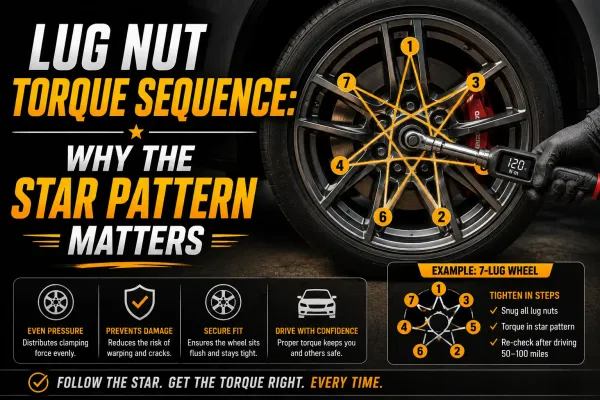
Multi-fastener joints are tightened in a sequence and in more than one pass, because tightening one fastener changes the load on its neighbors: torque sequence and why order matters.
And many modern specifications are expressed in stages, a torque followed by a measured angle, because angle is a better proxy for stretch than torque is: torque plus angle explained.
A chart entry showing one number for a fastener that has a two-stage specification is not a simplification. It is wrong.
Which document actually holds your figure
Three tiers, and torque generally lives in the second and third.
The owner's manual is written for operating the vehicle and generally does not carry repair torque figures. Wheel torque is the partial exception and it is worth checking.
The factory service manual for your model year and market is written for repair and carries the figures with their conditions and sequences attached.
Manufacturer service information is the current form of the same thing, delivered by subscription, and it resolves to your specific vehicle.
Full comparison and how to tell them apart: owner's manual vs service manual vs repair database.
How an individual gets access to manufacturer service information
This is the fact that most changes what a private owner can do, and it is barely present in search results.
Manufacturers make service information available beyond their dealer networks, and in practice that generally means an individual can buy access, commonly as a short subscription measured in days rather than years.
For a single job where a figure genuinely matters, that is frequently the cheapest correct answer available, and it is a different quality of answer from any chart. You will need to identify your vehicle precisely, which means the VIN and often the build date, both of which are on the vehicle.
The wheel case, which is the one most people arrive for
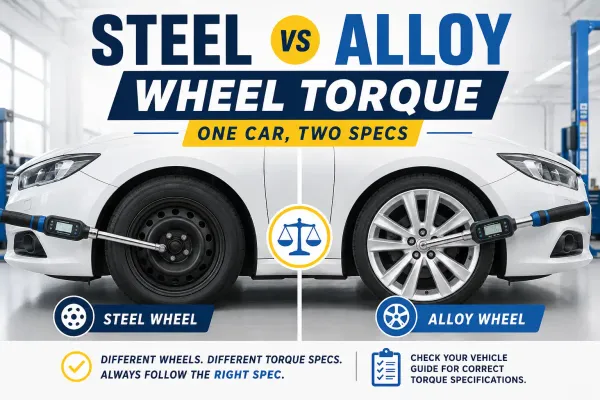
Wheel fasteners are the most-searched torque question and they have their own complications: the specification may differ between steel and alloy wheels on the same vehicle, and aftermarket wheels introduce a second party with a legitimate claim to specify.
The dedicated walkthrough, including the places the owner's manual hides it: where your wheel torque spec actually lives.
If your wrench and your specification are in different units, convert carefully, because the foot-pound and inch-pound confusion is an order-of-magnitude error: ft-lb, Nm and kg-m conversion.
When the correct answer is a professional
Some fasteners are not a research problem.
Braking is the clearest case, and this site treats it that way rather than publishing a figure that would look helpful: brake caliper and bracket torque.
More generally, if you have spent an hour, found three different answers, and the fastener you are about to tighten is one where being wrong has consequences, a dealer service department or an independent shop with a service information subscription has the manufacturer's figure for your VIN in front of them. That is the correct end of the search rather than a shortcut around it.
Why this site publishes no torque values
Stated plainly, because you are entitled to know the policy you are being held to.
We cannot verify manufacturer torque specifications across the thousands of model year, trim, engine and market combinations on the road. The sites publishing those tables get them by copying each other, which is why they disagree, and the disagreement is exactly why you kept searching until you landed here.
A wrong torque figure on a wheel, a brake or a suspension fastener is not a bad article. It is a fastener that fails, and it fails while the vehicle is being driven.
So the deal is different here. We will teach you what a torque specification actually consists of, where yours lives, how to read the tool you are applying it with, and which conditions invalidate a figure you already have. What we will not do is hand you a number we cannot stand behind for your exact vehicle.
Frequently asked questions
Where do I find torque specs for my car?
In manufacturer service information for your model year and market, or a factory service manual. The owner's manual generally does not carry repair torque figures, with wheel torque as a partial exception.
Why do online torque charts disagree?
Different assumed configurations, different markets, mid-year production changes, rounded unit conversions, and widespread copying between sites. Two charts agreeing is not confirmation if one came from the other.
Can I use a torque chart for a similar vehicle?
No. Configuration, market and build date differences are exactly the variables a chart cannot see, and a fastener torqued to another vehicle's figure can fail.
Is a torque figure just a number?
No. It is a number plus conditions: thread state, whether the fastener is reusable, and any sequence or staging. A number without its conditions is not the specification.
Can a private owner buy manufacturer service information?
Generally yes, often as a short subscription. For a single job where the figure matters, it is usually the cheapest correct answer available.