TPMS and New Wheels: Why the Light Comes On
After a wheel change a TPMS light usually means the system has not been told what changed. Here are the three fitment situations, kept apart.

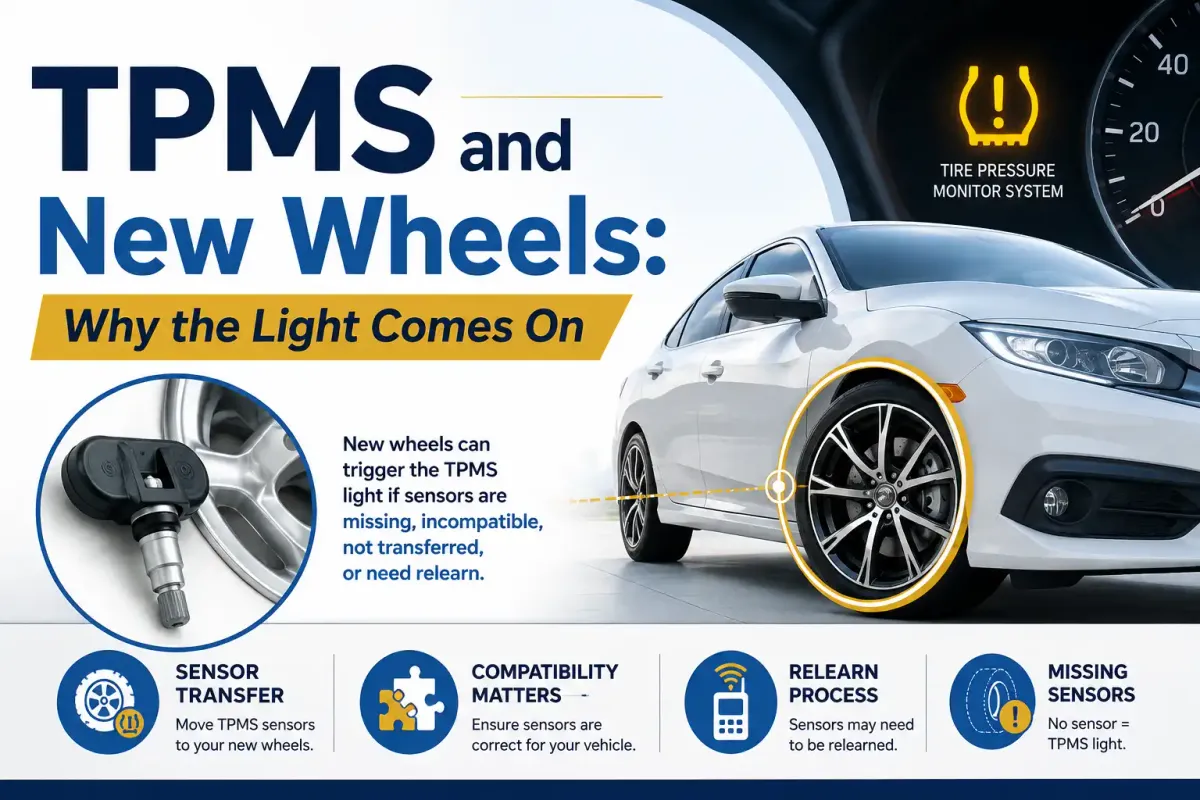
Short answer: after a wheel change, a TPMS light most often means the system has not been told what changed, rather than that anything is broken. There are three genuinely different fitment situations behind it, and separating them is the whole job: the new wheels may have no sensors at all, they may have sensors that were never registered to your vehicle, or they may have sensors that are not compatible with your vehicle in the first place.
This page covers the fitment question only, which is whether a sensor is present, compatible and registered. It does not diagnose a warning light as a fault, and the last section says where that question belongs.
What a TPMS sensor is and where it lives
A tire pressure monitoring system watches the pressure in each tire and warns the driver when it falls outside the expected range.
On systems that use them, the sensor is a small device inside the wheel, usually attached at or built into the valve. Because it lives inside the wheel rather than on the vehicle, changing wheels means changing whatever sensors were in the old ones for whatever is in the new ones.
That single fact explains almost everything about why wheel changes and TPMS lights go together. The sensors did not stay with the car.
Each sensor is identified to the vehicle, so the vehicle knows which sensor is which corner. That identification is the thing most often missing after a change.
Situation one: the new wheels have no sensors
The simplest case, and common with used wheels bought without tires or from a vehicle that had its sensors removed.
If the wheels have no sensors, the vehicle receives nothing from those corners. What the vehicle does about that varies by system, but a warning of some kind is the normal outcome.
The check is physical: sensors are visible inside the wheel with the tire off, and the valve itself often differs in appearance between a sensor-equipped wheel and a plain one. This is a question to ask before buying, not after fitting.
Situation two: sensors are fitted but not registered
The most common case, and the one most often mistaken for a fault.
Many systems need to be told which sensors are now on the vehicle and at which corner. Until that happens, the vehicle is either receiving signals it does not recognize or expecting signals from sensors that are no longer fitted.
This is a fitment step, not a repair. It is part of correctly completing a wheel change, in the same way that torquing the fasteners correctly is, and it is usually done with equipment a tire shop has.
If your light appeared immediately after a wheel change and the wheels definitely have sensors in them, this is the first thing to ask about. "Were the sensors registered to the vehicle?" is a precise question and it gets a precise answer.
Situation three: the sensors are not compatible with this vehicle
The case that produces the most wasted effort, because the wheels have sensors and the light is still on after registration.
Sensors are not universal. Different vehicles use different systems, and a sensor from another vehicle may not be something yours can work with, regardless of it being physically present and physically fitting the wheel.
The distinction that matters: fitting in the wheel and working with the vehicle are two separate requirements, which is the same pattern as everything else in this cluster. A sensor that bolts into the wheel is not thereby compatible, exactly as a wheel that bolts onto the hub is not thereby correct: will these used wheels fit.
Compatibility is determined by the vehicle and the sensor, and it is established from the sensor manufacturer's application information rather than by trying it.
What to ask before buying used wheels
Add these to the six fitment questions you should already be asking:
Do the wheels have TPMS sensors fitted? Ask for a photograph of the valve area, inside and out.
What vehicle did they come off? This is the starting point for whether the sensors could be compatible with yours.
Were the sensors working when removed? Sensors have a service life, and a sensor that was already at the end of it on the previous vehicle is not going to improve.
Will the seller confirm the part number? If the sensors are visible, a part number is the thing that settles compatibility rather than a guess.
Budget for sensors as part of the cost of used wheels rather than as a surprise afterward. That is the practical planning point.
Where the fitment question ends and a fault question begins
This is the boundary of this article, and it is worth stating plainly.
Everything above is about whether the right sensors are present, compatible and registered. That is a fitment question, and it is what this site covers.
If your TPMS light is on and the wheels have not been changed, or it stays on after the sensors have been confirmed correct and registered, that is no longer a fitment question. It is a fault, and diagnosing faults is not something this site does. Take it to a tire shop or a qualified technician who can read what the vehicle is actually reporting.
The same applies to anything about what pressure your tires should be. We publish no pressure figures anywhere, and your vehicle's own specification is on its placard and in its manual: reading the tire lines on the loading placard.
For the vehicle's own documentation on the system: owner's manual vs service manual vs repair database. And for reading what is molded into the tires that arrive on a set of used wheels: every number on your tire sidewall, decoded.
Frequently asked questions
Why did my TPMS light come on after new wheels?
Most often because the system has not been told which sensors are now fitted and where. Sensors live inside the wheel, so a wheel change replaces them, and many systems need to be told.
Do all wheels have TPMS sensors?
No. Used wheels frequently arrive without them, particularly if bought without tires. Check before buying rather than after fitting.
Can I use TPMS sensors from another vehicle?
Fitting in the wheel and working with your vehicle are separate requirements. Compatibility comes from the sensor manufacturer's application information, not from the sensor physically fitting.
Is registering sensors a repair?
No, it is a fitment step, part of correctly completing a wheel change. Tire shops generally have the equipment for it.
My light is still on after everything was registered. What now?
That is past the fitment question and into a fault, which this site does not diagnose. Take it to a tire shop or a qualified technician who can read what the vehicle is reporting.