What ATF Does My Car Take? Coverage vs Licence
A bottle listing 40 vehicles is making a coverage claim. A licensed specification is a different kind of statement, and only one of them is checkable.

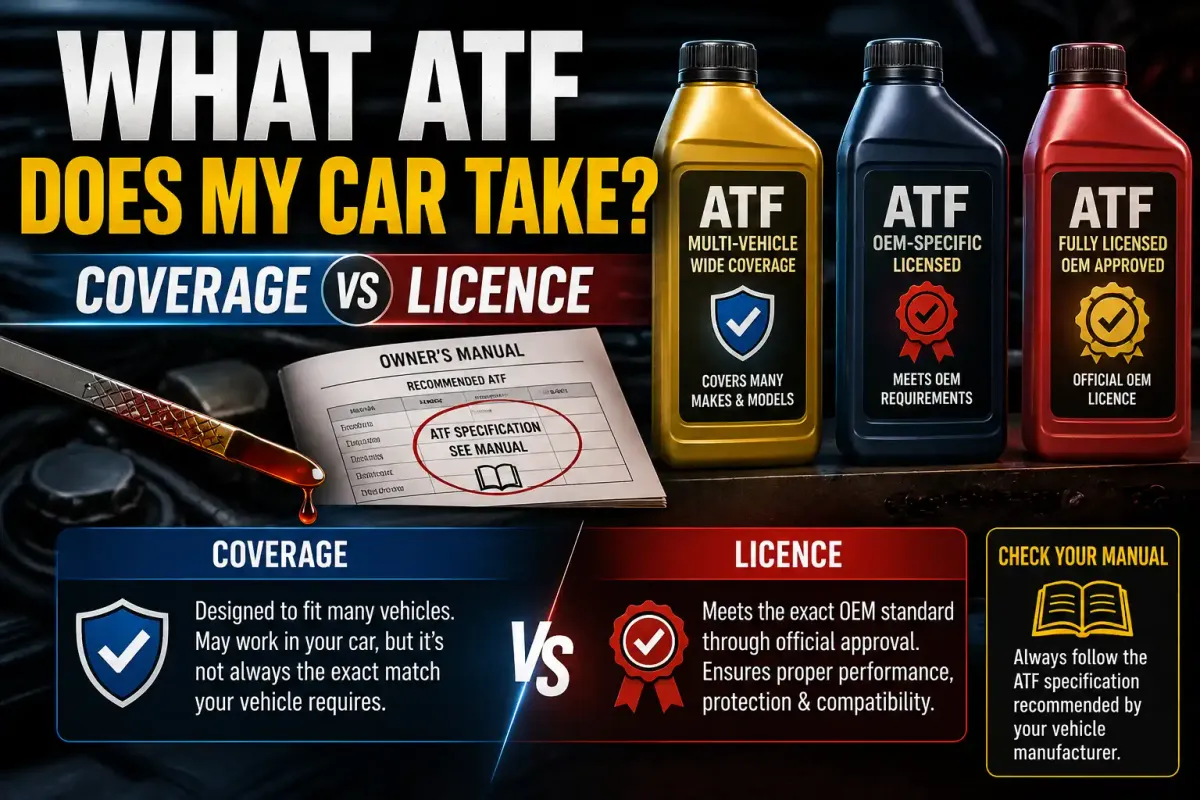
Short answer: a bottle listing forty vehicles is making a coverage claim, which is a different kind of statement from carrying a licensed specification. Your suspicion is well founded. Some manufacturer ATF specifications are licensed, meaning a product carrying one has been through the manufacturer's programme and holds an identifier that can be checked. A coverage list on the back of a bottle is the seller telling you where they believe their product is suitable.
Both can be honest. Only one of them can be verified.
The specification names in the title are used as examples of a system, not as recommendations.


As an Amazon Associate we earn from qualifying purchases.
What ATF is doing besides lubricating
Automatic transmission fluid does more jobs at once than almost any other fluid in the vehicle.
It lubricates. It transfers heat. It acts as the hydraulic medium that operates the transmission's control system. And, critically, it is the friction medium inside clutches and bands.
That last function is the one that makes ATF specification-critical, and it is the one people do not know about.
Why friction characteristics make ATF specification-critical
Inside an automatic transmission, clutch packs engage by clamping friction material together with fluid present. How that engagement feels and behaves depends on how the fluid's friction properties change as the surfaces come together.
Transmission engineers design the control strategy around a specific friction behavior. The shift quality the vehicle delivers is the product of the hardware and the fluid together.
Change the fluid's friction characteristics and the engagement behavior changes, even though the fluid is lubricating and cooling perfectly well. That is why ATF is not interchangeable in the way engine oil grades partly are: with engine oil the requirement is a performance level, while with ATF a meaningful part of the requirement is a specific behavior.


As an Amazon Associate we earn from qualifying purchases.
Manufacturer specifications and what licensing means
Vehicle manufacturers publish ATF specifications describing what their transmissions require.
Some of those specifications are operated as licensing programmes. A fluid manufacturer submits a product, it is tested against the specification, and if it qualifies it is licensed to carry the specification and issued an identifier.
That identifier is the verifiable part, exactly as it is with engine oil approvals: OEM oil approvals and what they mean.
Where a specification is licensed, a product either holds the licence or does not, and it is checkable against the manufacturer's published list.
What a multi-vehicle bottle is actually claiming
Read the back of a universal or multi-vehicle ATF carefully and the language usually distinguishes two things, though not always prominently.
Specifications the product is licensed against, which will be named and identified.
Applications where the manufacturer of the fluid states it is suitable, which is a much longer list and a different kind of claim.
The long list is not fraudulent. A formulator with a good product may have real grounds for believing it is suitable across many applications. But "we believe this is suitable for your vehicle" and "your vehicle's manufacturer licensed this product" are different statements, and the bottle is often designed so the longer list is more visible.
The general pattern of a claim with a checkable source versus one without: why two websites give your car two different numbers.
How to check whether a product genuinely carries your specification
Three steps.
Find what your vehicle specifies. Owner's manual specifications section, or manufacturer service information: how to find every fluid spec your vehicle requires.
Look for that exact specification named on the bottle, with an identifier where the programme issues one. Not "suitable for" and not "meets the requirements of," but the specification named as one the product carries.
Check the identifier against the vehicle manufacturer's list where one is published.
If a product does not name your specification as one it carries, it does not carry it, whatever the coverage list says.


As an Amazon Associate we earn from qualifying purchases.
Where your vehicle's ATF specification is written
The specifications section of the owner's manual, alongside the other fluids.
Some vehicles carry information at the dipstick or fill point where those exist. Note that many modern transmissions have no dipstick at all, which is a design decision that makes the whole subject less accessible to owners than it used to be.
Where the manual is not enough: owner's manual vs service manual vs repair database.
When to stop and ask rather than substitute
Four situations.
Your vehicle has a CVT or a dual-clutch transmission. These are a different situation again and the universal claim is weaker there than for conventional automatics: CVT and DCT fluids.
Your manual names a specification you cannot find on any bottle. Ask a dealer parts department rather than substituting.
The transmission is behaving differently. That is a fault question rather than a specification question, and this site does not diagnose faults. Take it to a qualified technician.
You are unsure what is currently in it. On a used vehicle, that is genuinely unknown.
We do not tell you which fluid to use, we do not publish capacities, and we do not publish change intervals for anything. When to service a transmission is a maintenance question, not a specification question, and it belongs with your manual's schedule and a qualified technician.
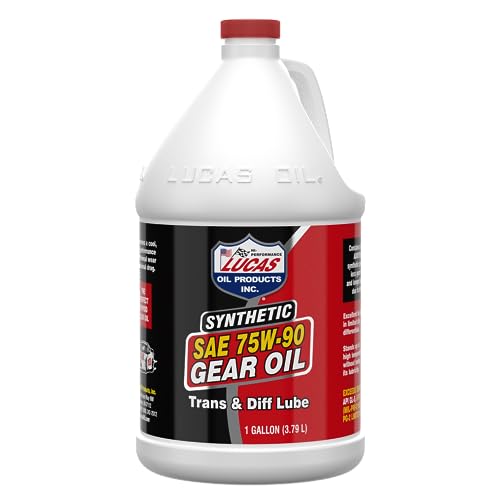
Related on the gear oil side, where a similar numbering trap exists: GL-4 vs GL-5 gear oil.

As an Amazon Associate we earn from qualifying purchases.
Frequently asked questions
Does a universal ATF really cover my car?
It may be making a suitability claim rather than carrying your vehicle's licensed specification. Look for your specification named as one the product carries, with an identifier where the programme issues one.
Why does transmission fluid have to be so specific?
Because the fluid is the friction medium inside the clutches, not just a lubricant. Shift behavior is designed around specific friction characteristics, so a different fluid changes how the transmission engages.
What is the difference between licensed and suitable?
Licensed means the vehicle manufacturer tested the product against their specification and issued an identifier. Suitable means the fluid's maker believes it works there. Only the first is checkable.
Where do I find my ATF specification?
In the specifications section of the owner's manual, or in manufacturer service information for your VIN.
My transmission is shifting oddly. Is it the fluid?
That is a fault question, and this site does not diagnose faults. Take it to a qualified technician who can inspect the vehicle.