Are Wiper Blades Different Sizes Each Side? Why and How
Are wiper blades different sizes each side? Often, yes. Learn why the lengths differ, which side gets which, and how to read your own car's sizes.

Are wiper blades different sizes each side? On many cars, yes, and that is by design rather than a mistake. The two wiper arms do not pivot from symmetrical points, so each blade is sized to sweep its own patch of glass without hitting the frame, the other blade, or the windshield edge. Some vehicles do use the same length on both sides, and a few use one arm. The only reliable way to know is to read your own car's sizes from the owner's manual, a maker's fitment lookup, or the blades already on the arms.
If you bought two identical blades and one of them does not reach, or one clatters against the trim, the rest of this guide explains what happened and how to find the right pair.


As an Amazon Associate we earn from qualifying purchases.
Why the two wipers are not a mirror image
Look at where the wiper arms bolt to the car. On most left-hand-drive vehicles sold in the US, both pivots sit toward the driver's side of the cowl, with the passenger pivot close to the middle of the windshield. The two arms sweep in the same direction, one behind the other. This layout is usually called a tandem system.
Because the pivots are not placed symmetrically, the two arms swing through different arcs. The driver's blade has to stop short of the pillar and the top molding on its side. The passenger blade has to reach across toward the far side of the glass while staying clear of the driver's blade as the two cross paths. A blade length that works perfectly on one arm would either leave an unwiped band or collide with something on the other.
So the lengths are not arbitrary. They are the result of where the engineers put the pivots, how long they made the arms, and how curved the glass is.
What the federal standard asks the wipers to do
In the US, windshield wiping is covered by Federal Motor Vehicle Safety Standard No. 104. As published in the Code of Federal Regulations at 49 CFR 571.104 on the Cornell Legal Information Institute site (read 27 September 2026), section S4.1.2 requires a passenger car's wiping system to wipe 80 percent of Area A, 94 percent of Area B and 99 percent of Area C. Those three zones are defined geometrically, using angles set out in the standard's tables and referenced to SAE Recommended Practice J903a, and the applicable table depends on the vehicle's overall width.
The practical point for a blade buyer: the wiper system as a whole was engineered to hit specific coverage targets for that vehicle. The blade lengths listed for your car are part of how it meets them. Swapping to a length the car was not designed for changes the swept area, sometimes in ways you only notice at night in the rain.

As an Amazon Associate we earn from qualifying purchases.
Which side is usually longer?
There is no universal rule, and this is where a lot of shoppers go wrong.
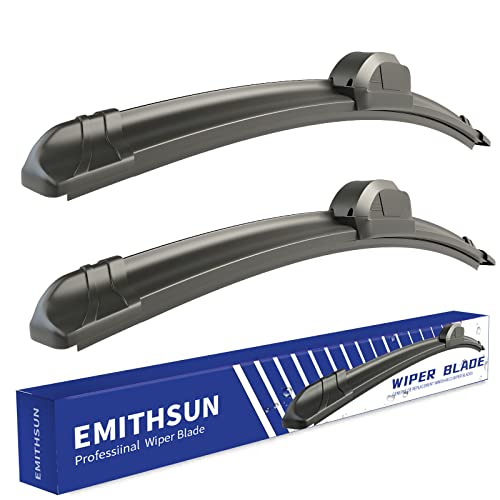
On many US-market cars with a tandem layout, the driver's blade is the longer of the two. But the reverse is also common, depending on how far apart the pivots are and how the arms are angled. Many trucks and some SUVs use the same length on both sides. The honest answer is that "longer on the driver's side" is a pattern, not a law, and a chart that assumes it will be wrong for some vehicles.
Two situations flip the usual picture entirely:
- Right-hand-drive cars. A vehicle built for markets that drive on the left typically mirrors the layout, so the arm and blade roles swap sides. If you are reading a size chart written for US cars while owning a right-hand-drive import, the "driver" and "passenger" columns may not map onto your car the way you expect.
- Opposed systems. Some vehicles park the two arms at opposite sides of the car and sweep them toward the middle, overlapping in the center. The blades on these systems are sized for their own arcs, which again may not follow the tandem pattern.
Length is not the only difference between the two sides
Buying two blades of the correct lengths still does not guarantee a correct pair. Three other things can differ from side to side.
Curvature
Windshields curve, and they usually curve more toward the edges. Bosch explains this on its own FAQ page about its ICON blade line, What is the difference between A/B/OE on ICON wiper blade packaging (read 27 September 2026). The page states that the driver side always has an "A" part number, that the passenger side can be "A" or "B" depending on the vehicle, and that "B" blades have a greater curvature designed to wrap around the passenger side. Bosch says the correct blade depends on a combination of blade length and windshield curvature.
That is one manufacturer's product line, not an industry standard, but it illustrates the point: two blades of the same length can be built for different sides of the same windshield.
Connector type
Wiper arms end in different attachments: J-hooks, side pins, pinch tabs, top locks, bayonets and several proprietary fittings. The two arms on one car normally use the same connector, but not always, and a blade listed for your car may need a different adapter than the one fitted in the box. If a new blade will not seat on the arm, the connector is the first thing to check, not the length.
Spoilers and handed blades
Some blades carry an aerodynamic spoiler that is shaped to face one direction, which makes the blade specific to one arm. Fitting it on the wrong side, or upside down, can reduce the downforce the spoiler was meant to provide at speed.


As an Amazon Associate we earn from qualifying purchases.
How to find the correct size for each side of your car
The most reliable sources, in order:
- Your owner's manual. Many manuals list replacement wiper blade lengths in the specifications or maintenance section. If you no longer have the printed copy, most makers publish them free, and our guide to getting your owner's manual free, by manufacturer lists where to look.
- A blade maker's fitment lookup. Bosch, Trico, Rain-X and other blade brands run lookups by year, make and model. They return a length for each side, and usually the connector and any left or right designation.
- The blades already on the car, if they are original. Many blades carry a length marking or part number on the frame or the rubber refill. Measure the refill tip to tip with a tape as a check.
- A parts counter with your VIN. Where a model changed wiper hardware partway through production, a VIN-based lookup is safer than a model-year lookup.
Write down both lengths separately, labeled by side, before you buy. "22 and 20" is not enough information if you cannot remember which arm takes which. Our Michelin wiper blades size chart shows driver and passenger pairs for common cars as Michelin's licensee lists them.
Why fitment charts sometimes disagree
If one lookup says your passenger blade is 18 inches and another says 19, you are not imagining it. Lookups are built from different catalogs, and some round to the nearest inch while others list metric lengths. The same issue affects every kind of vehicle spec, and we cover it in more depth in why two websites give your car two different numbers.
Mid-year changes are another source of disagreement. A vehicle built early in a model year can carry different hardware from one built late in the same year, which is explained in our article on model year vs build date. Trim levels matter too: a sport or off-road package can change the windshield or the cowl. If you are not sure which version you have, see how to tell what trim your car is.
When two sources disagree, the owner's manual for your exact vehicle is the tiebreaker. If the manual is silent, measure the originals.
What goes wrong when you fit the wrong length
Getting this wrong is usually annoying rather than dangerous, but it can affect how well you see in bad weather.
- Passenger blade too long. It can strike the driver's blade where the two sweep areas overlap, hit the A-pillar or the top molding, or hang over the edge of the glass. Blades that collide wear quickly and can bend the arm.
- Driver blade too long. It can overrun the edge of the glass on its side or foul the trim at the top of its sweep.
- Either blade too short. It leaves an unwiped band, often at the outer edge or across the top of the glass, which is exactly where you look when checking mirrors or reading signs.
- Wrong curvature for the side. The blade may lift at the ends and streak, even though the length is correct.
If a blade you fitted chatters, streaks at one end, or clips anything on its sweep, stop using the wipers on that setting and check the length and side before assuming the blade is faulty.
Don't forget the rear wiper
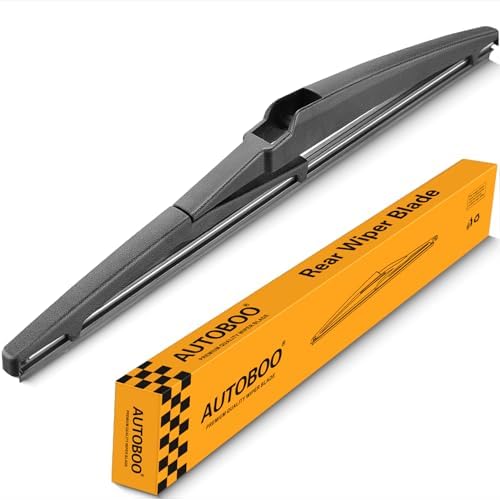
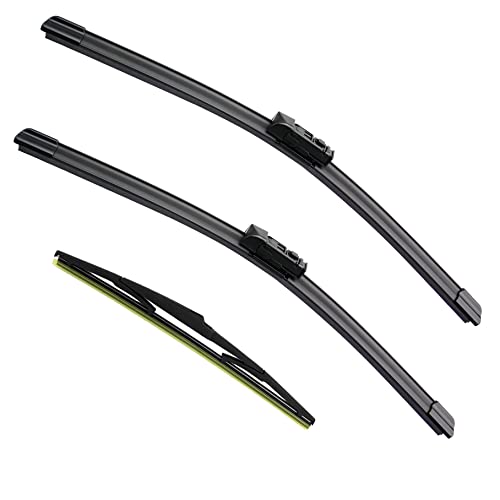
Hatchbacks, SUVs and wagons often have a rear wiper, and its blade is usually a separate size with its own connector. Some rear arms take a proprietary blade that only fits that model. Check the rear size in the same place you check the front two. If you plan to add a decal to the back glass, our rear window car decal size chart shows how to size it to stay clear of the rear wiper's sweep.
Frequently asked questions
Are wiper blades different sizes each side on every car?
No. Many cars use two different lengths, but plenty of trucks and some SUVs use the same length on both sides. Check your owner's manual or a maker's fitment lookup rather than assuming.
Is the longer wiper blade always on the driver's side?
Not always. It is common on US-market cars with a tandem layout, but it depends on where the pivots sit and how the arms are angled. Right-hand-drive vehicles typically mirror the arrangement.
Can I fit two blades of the same length if my car calls for two different sizes?
It is not recommended. A blade that is too long can hit the other blade or the trim, and one that is too short leaves an unwiped band. Fit the lengths listed for your vehicle.
Do left and right blades of the same length differ?
They can. Some blades are curved for one side of the windshield, some have a spoiler that faces one way, and the connector may differ. Bosch, for example, designates some passenger blades with a "B" part number for greater curvature.
Where do I find my car's wiper blade sizes?
The owner's manual is the first place to check. After that, use a blade maker's lookup by year, make and model (our Rain-X wiper blades size chart shows which lengths one maker offers), or measure the original blades on the car tip to tip and note which side each came from.