Keep Record of Car Specifications: Build a Spec File
Keep record of car specifications in one sourced file and stop re-looking up tire pressure, oil and torque figures every time you need them.

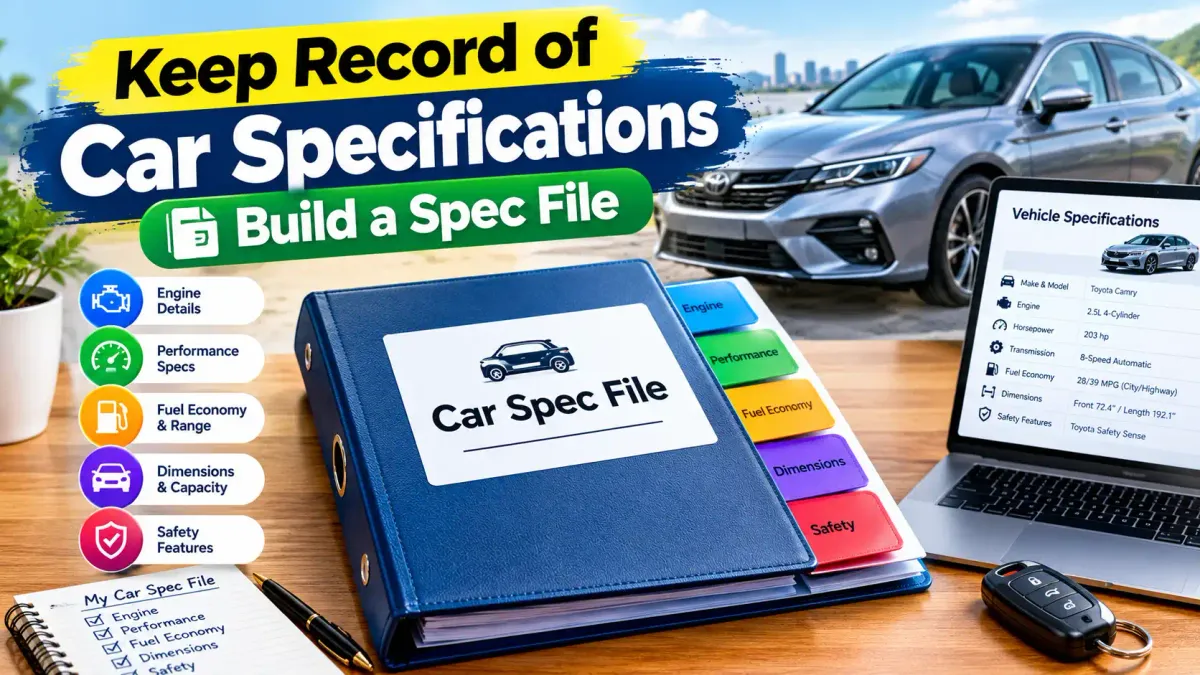
Short answer: the easiest way to keep a record of car specifications is a single spec file, on paper or in a note on your phone, that lists the handful of figures you look up again and again, each with the exact source it came from and the date you checked it. Build it once from your door jamb label, tire placard, owner's manual and window sticker, not from websites. Then update it whenever you change wheels, tires or parts. You stop re-searching, and you always know which numbers you can trust.
Most people look up the same six or so numbers over and over: tire pressure, oil specification and capacity, wheel torque, tire size, bulb and wiper sizes. A spec file ends that.


As an Amazon Associate we earn from qualifying purchases.
Why a spec file beats searching every time
Every search for a figure is a fresh chance to land on the wrong one. Spec websites mix up trims, years and markets, and the answer you find this time may not match the one you used last time. A spec file fixes the figure once, from your own vehicle's documentation, and records where it came from.
That last part matters more than the number. A figure with no source is only as good as your memory of where you found it. A figure written as "from the door jamb placard, checked on a given date" can be trusted, re-checked and handed on.
A spec file is also different from a maintenance log. A log records what was done and when. A spec file records what the car needs. Most owners benefit from both, kept together.
What to put in the spec file
Start with the figures you actually use. You do not need every number the manufacturer publishes.
Identity
- Full 17-character VIN
- Model year, make, model, trim
- Engine code and transmission
- Build date (from the door jamb certification label)
- Paint code, if you may need touch-up paint
Tires and wheels
- Tire size, load index and speed rating as fitted
- Recommended cold tire pressures, front and rear, and spare if it differs
- Wheel lug nut torque, with units
- Bolt pattern and thread size, if you ever buy wheels or nuts
Fluids
- Engine oil specification, viscosity and capacity
- Coolant type
- Brake fluid type
- Transmission fluid type
- Any other fluids your manual specifies, such as differential or power steering fluid
Parts you buy repeatedly
- Oil filter and air filter part numbers
- Wiper blade sizes, driver and passenger
- Bulb types for headlights and other lamps you replace
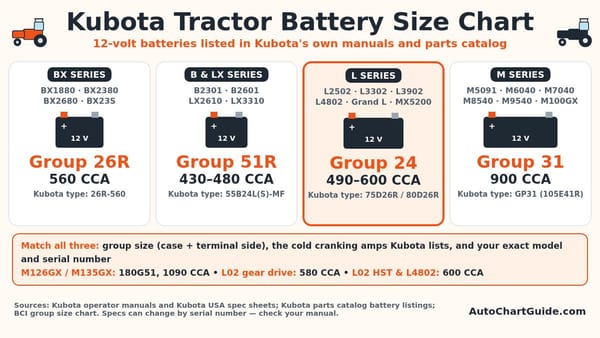
- Battery group size
Ratings
- Maximum vehicle load, from the tire and loading placard
- GVWR and axle ratings, from the certification label
- Towing capacity, only from the manufacturer's documentation for your exact configuration


As an Amazon Associate we earn from qualifying purchases.
Where each entry should come from
The rule for a spec file is simple: every figure comes from a source that describes your specific vehicle, and the source is written next to it.
| What to record | Best source | Why it can differ between cars |
|---|---|---|
| Tire pressure and maximum load | Tire and loading information placard | Varies by trim, tire size and seating |
| Build date, GVWR, axle ratings | Door jamb certification label | Specific to the individual vehicle |
| Oil, coolant, brake fluid | Owner's manual, and labels on caps or reservoirs | Varies by engine and market |
| Wheel torque | Owner's manual or service information | Can differ by wheel type or model generation |
| Factory equipment and engine | Original window sticker | Records how the car was ordered |
| Part numbers | Dealer parts desk by VIN, or the part itself | Can vary by build date and options |
If you are not sure how to read the labels, our guides to reading the door jamb sticker line by line and to the tire and loading information placard walk through each field.
For the manual itself, many manufacturers publish owner's manuals free online. Our list of where to get your owner's manual free, by manufacturer points to the official sources. Make sure you download the manual for your model year and market.
The original window sticker is the best record of factory equipment and options. If you do not have it, see how to get the original window sticker by VIN.
How to keep a record of car specifications that stays accurate
A spec file goes stale when the car changes and the file does not. A few habits keep it right.
Write the source and date for every entry. For example, note that a pressure came from the placard, or that a torque figure came from a named section of the owner's manual, and when you checked it. If a website or chatbot was your starting point, record the document you confirmed it against, not the website.
Record units every time. Torque in ft-lb or Nm, pressure in psi or kPa, capacity in quarts or liters. A number without units is a trap.
Update it when you change something. New wheels, different tire sizes, aftermarket lug nuts, a replacement engine or a changed battery can all change figures. Aftermarket wheels in particular may come with their own torque figure. Write the new figure and its source, and mark the old one as replaced rather than deleting it. The same goes for tuning parts: if you swap a carburetor's pump cam, our Holley accelerator pump cam chart lists the number molded into each cam so you can record exactly which one is fitted.
Flag anything you could not verify. If a figure came from a source you could not confirm, mark it clearly as unverified. That is still useful as a lead, and it stops you trusting it by accident later.
Do not copy a figure from another vehicle. A friend's car of the same model may have a different trim, engine or build date.
Paper, phone or both
The format matters less than keeping it current and findable.
A one-page printed sheet in the glovebox is always with the car and does not need a charged phone. Keep it short enough to fit one page, and keep the full manual too, since the sheet is a summary, not a replacement.
A note or document on your phone or computer is easy to update and search, and you can attach photos.
Photos of the labels themselves are worth taking regardless. A clear photo of the door jamb label, the tire placard and the under-hood emissions label preserves the source, not just your copy of it. That also helps if a label is later damaged or removed. If you tow, add the model code from the door jamb label too. Our Toyota Tundra towing capacity chart shows why the trailer rating depends on it.
Many owners use both: a digital master file, with a printed copy in the car that they reprint when something changes.


As an Amazon Associate we earn from qualifying purchases.
Add your maintenance records alongside it
Keep the spec file with your service records and parts receipts. They support each other: the spec file says what the car needs, and the records show what it got.
Records can matter beyond convenience. The Federal Trade Commission's consumer guide to auto warranties and service contracts (read September 28, 2026) advises owners to "Keep records of repairs and maintenance like oil changes, tire rotations, belt replacement, new brake pads, and inspections." It also states that "Your warranty stays in effect if you use aftermarket or recycled parts," which makes it worth recording which parts were used, and where they came from, for any work you or a shop do. For questions about your own warranty, read your warranty booklet or ask the manufacturer.
When you sell the car, a clean spec file and a complete set of records are useful to the next owner as well.
What a spec file cannot do
A spec file is a record of your documentation, not a replacement for it. If a figure in your file disagrees with a label on the car or a current manufacturer notice, the car and the manufacturer win, and the file needs updating. For safety systems such as brakes, steering and suspension, the file tells you what the specification is; it does not make the repair safe to do yourself. If you are unsure, use a qualified technician.


As an Amazon Associate we earn from qualifying purchases.
Frequently asked questions
What is the best way to keep a record of car specifications?
Keep one spec file, on paper or digitally, listing the figures you use most, each with its source and the date you checked it. Build it from your vehicle's labels and owner's manual rather than from websites.
Which car specs should I write down?
Start with tire size and pressures, wheel torque, oil specification and capacity, coolant and brake fluid types, filter part numbers, wiper and bulb sizes, and your VIN, engine code and build date.
Should I keep the spec sheet in the car?
A printed one-page copy in the glovebox is handy, as long as you keep the full owner's manual too and reprint the sheet when something changes.
What if I change my wheels or tires?
Update the spec file with the new tire size, pressures and any wheel or lug nut torque figure from the wheel or hardware maker, and note the source. Mark the old figures as replaced.
Can I build a spec file from a spec website?
Use websites only as leads. Every figure in the file should be confirmed against your own vehicle's labels, owner's manual, window sticker or the dealer, with that source written down.